
Sony a6300 Review In 2026 10 Years Later
It was an age where Sony was just beginning to put their stamp on the mirrorless camera market. The Sony a6300 and its APS-C predecessors evolved alongside their full framed bigger brothers. The a6300 came out in 2016, just 2 years after the the Fujifilm X-T1, and it quickly established itself as a new breed of APS-C hybrid camera. The focus was better than many of its peers, and the 4k was ground breaking and all in a compact body. It’s so far better than the original a6000.
It remains a very good camera albeit with a few weaknesses and it still remains a desired camera in the second market. Now let’s look at my very long term 10 year review. The question is, how does look and perform today?
Build Quality
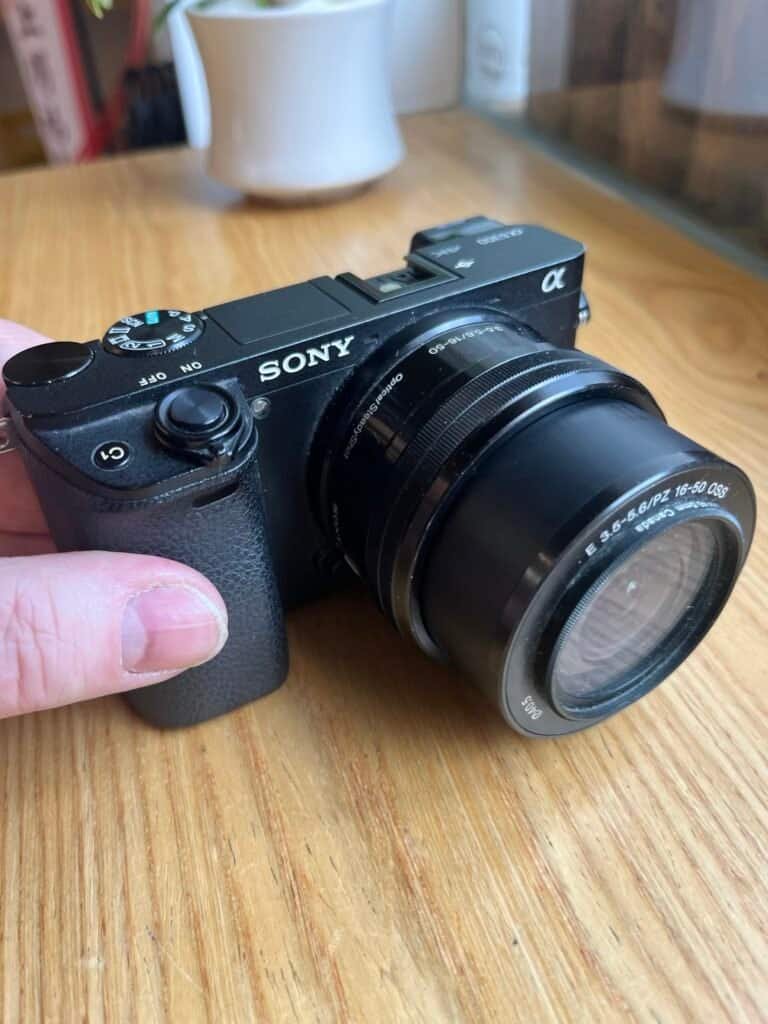
This feels as solid as any camera I have bought or handled, and better than most. The body is dense and surprisingly heavy for its compact size. You can’t help but feel comforted by its sturdiness, its built like a brick. As we all know bricks are made of a magnesium alloy.
I will tell you something about myself. I do dumb things. For example, before I had any knowledge of the a6300 being weather sealed, I took it out in torrential rain to make an impromptu video at night. I wouldn’t recommend you do this, but it did survive undamaged.
After 10 years, it remains my most robust and unscathed camera, except for a scratched, LCD screen. I have thrown this mirrorless camera around and into bags, for a long time and nothing has got seriously scratched, cracked or snapped.
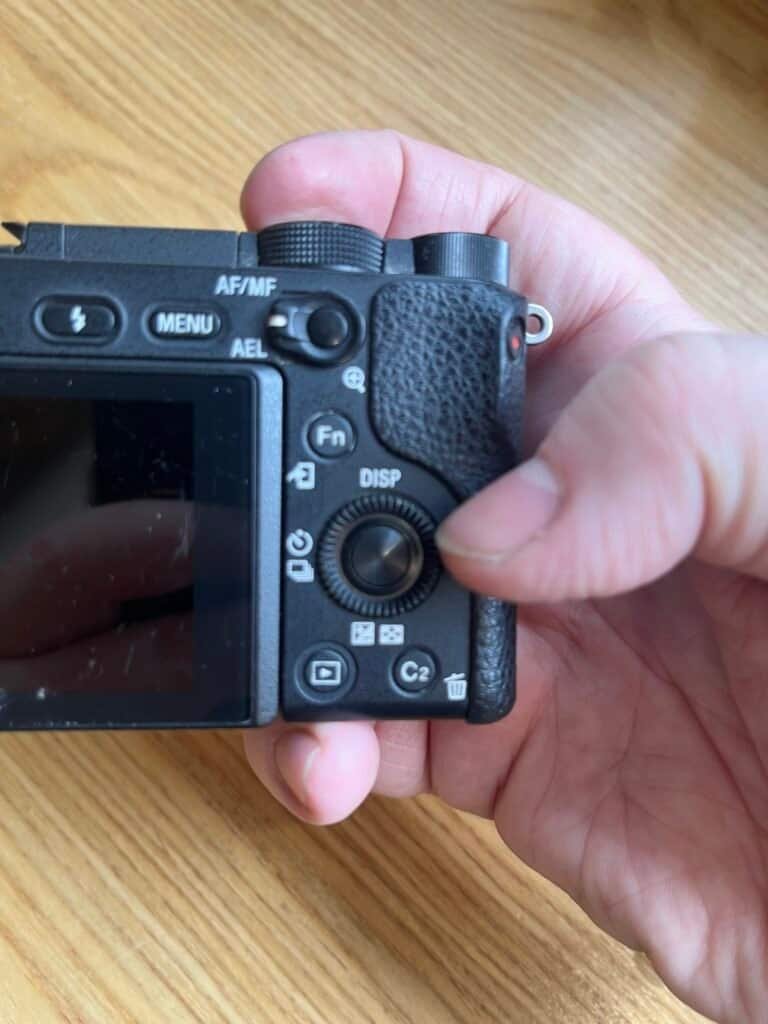
There only complaint have about the build really is the flimsy plasticky directional dial at the back, nothing has happened to it. It just feels cheap.
What I like:
- Feels extremely solid and dense for a compact camera
- Magnesium alloy body inspires confidence
- Weather sealing proved (I’ve used in heavy rain)
- Feels “professional” and serious
- Directional dial flimsy
The Handling
From my point of view, this is one of the best and most comfortable cameras I have handled. I have seen other reviewers talking about its shallow grip and I couldn’t disagree more. Just for the record I do have fairly big hands and sausage fingers and it’s not an issue for me.
While we are talking about deep grips, there’s not many mirrorless cameras that actually have them. Fujifilm’s XH series is one of the few APS-C cameras that have. Sadly they are neither compact or small.
I am not the biggest Sony fan or the original Sony a6000, I feel the Sony a6300 was where this line up of cameras started to become really good in performance. In terms of grip and general ergonomics even the original was strong and the Sonys since have just gotten better.
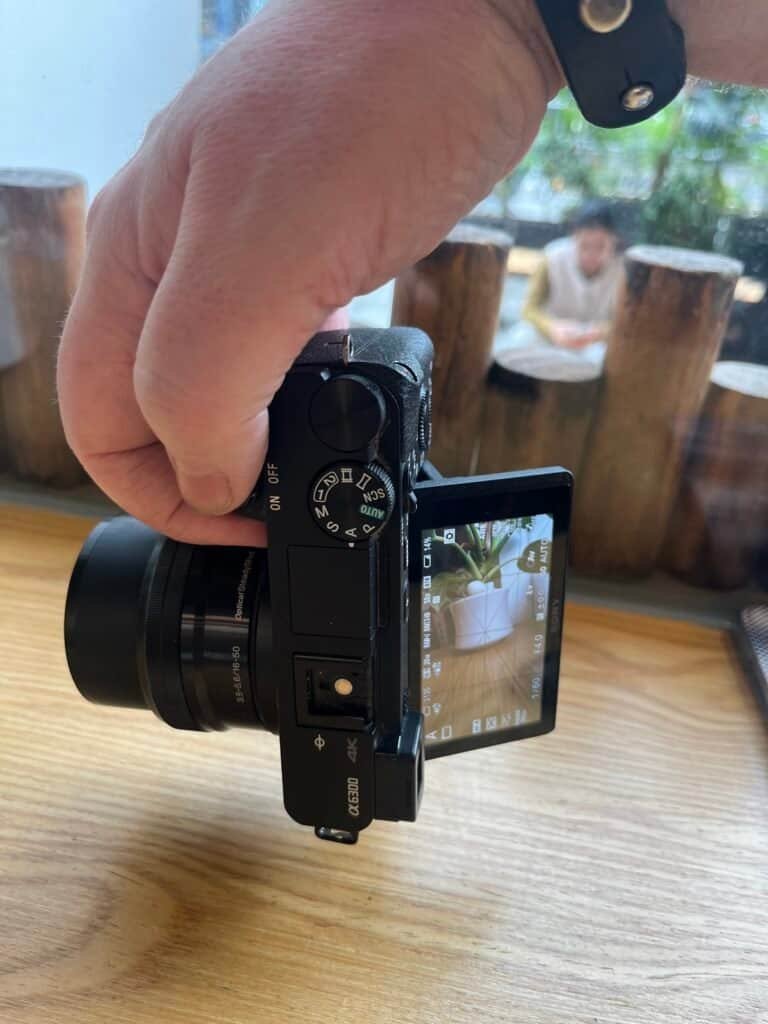
This camera is the only one of its category that I have owned, where I feel completely confident in handling and using it without any sort of grip. I have however only used the fairly small kit E PZ, 16-50mm f/3.5-5.6 OSS lens. I believe the camera would lose much of its balance and grip with a longer or heavier lens though.
However as it stands with that smaller lens I am able to shoot at low angles and in pretty awkward positions, by holding on with my figure tips, like a free solo climber on a cliff face.
What I Like:
- Comfortable grip even with large hand and sausage fingers (with small lens)
- Can shoot without a strap
- Easy to shoot with low angles one-handed
- Easy to shoot at awkward positions because it’s comfortable grip
Buttons
This is my only ergonomic complaint. I find the buttons are small and not very intuitively placed. For example the record button is recessed and tucked away at the side of the camera. This makes it a little awkward for video.
Yes I know you can remap buttons, but either way they are mostly kind of small. I particaly find the directional dial quite fiddly.
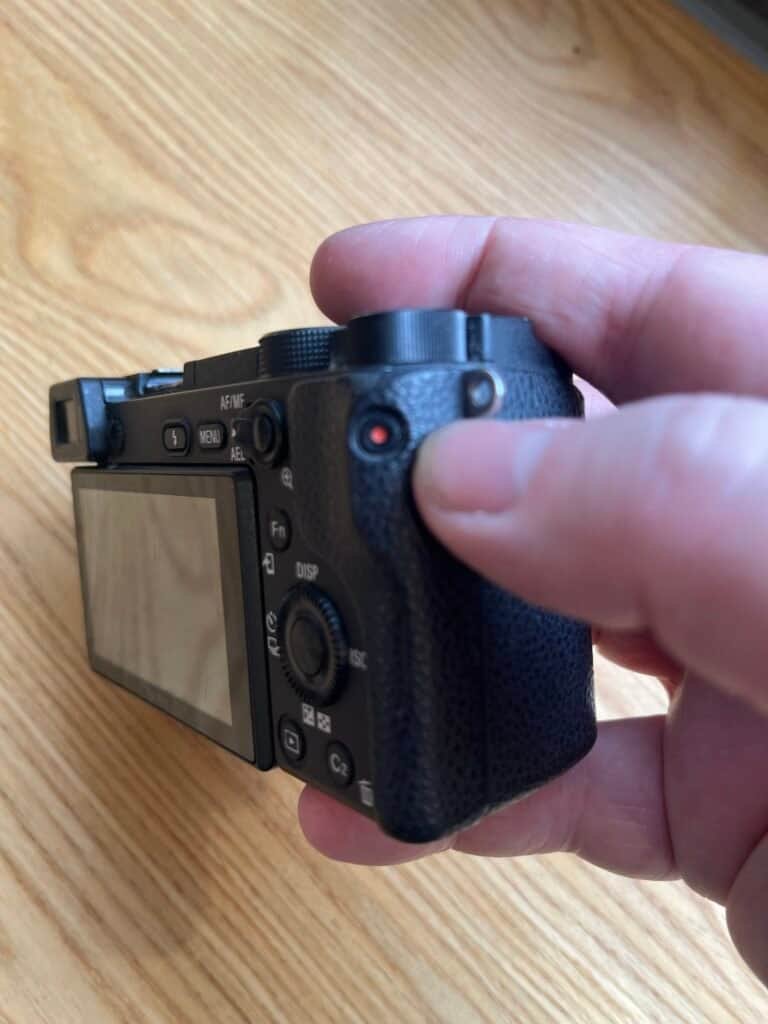
What I don’t like:
- Small buttons — especially for large hands
- Record button awkwardly placed
- Rear dial feels flimsy and fiddly

The Photos
The 24.2MP APS-C sensor on the Sony a6300 takes strong images. Personally I don’t feel there is any kind of baked in look with the jpeg files. I appreciate that, even though I almost always shoot in RAW. The images produced are very neutral in colours and vibe.

The RAW files are very customisable of course, but not the most flexible. So far the king of RAW files is my Nikon D600. Don’t get me wrong, it does have enough wiggle room with the highlights and shadows, although I don’t find the dynamic range fantastic. The files are solid, but nothing to write home about.
What I like:
- JPEG files are neutral color rendering (no heavy baked-in look)
- Solid RAW files with reasonable editing flexibility
- Reliable overall image performance for its era

Lowlight
Straight off the bat, I have only used the kit lens that came with my a6300. The lowest this lens goes is f3.5, but even with this the lowlight performance is quite good for its time. Below I will include a few images illustrating its iso performance.
Late afternoon at Carpark, Chengdu







For me the last most useable images was at ISO, I just included just for comparison.
Early evening at Carpark, Chengdu
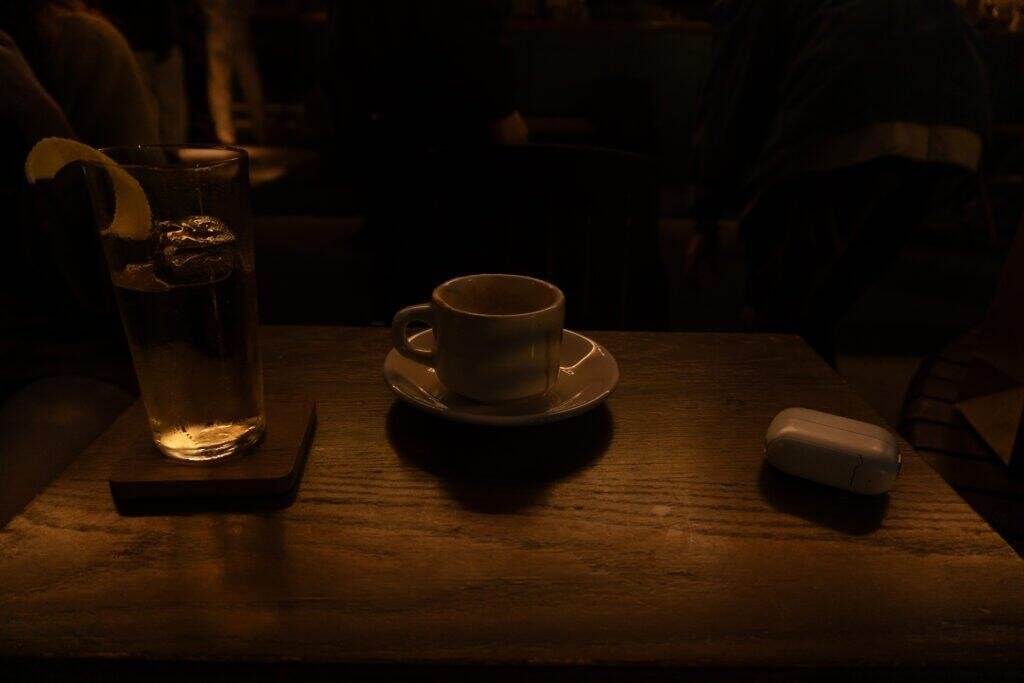







None of the images are particularly good, there is not strong source of ambient light, but its gets unusable after ISO 1600
Artificial light test – Carpark, Chengdu







Maybe it’s not a perfect test, but in terms of quality I would say the first few are the most useable.
What I like
- Very decent lowlight performance (even better with faster glass)
Autofocus
The AF is of course is a huge deciding factor when buying any modern camera. At the time this was one of the reasons I choose this camera.
You cannot really compare this performance with new cameras, or newer Sonys but it compares really well with other cameras from that period. It’s eye autofocus is not great, but really speaking I can’t complain too much.
It is definitely better than other classic cameras from brands like Fuji of the same period. I would say it’s almost on par with the X-T30 and that came out years later.
It’s autofocus in video use is also pretty good, although it does hunt at times.
What I like:
- Strong and dependable autofocus real use
- Better than many older mirrorless cameras
- Good enough for both stills and video
Video
The second reason I bought this camera was for video, as I was trying to shoot videos documenting life on the street, it performed really well for that. In fact this camera was one of those break through cameras for 4k video when it first came out.
My initial attraction to this camera was this hybrid nature. In fact it’s the first camera I owned that could do everything well.
I have not used the S-log much. At the time I was very happy with the video produced straight out of camera.
What I like:
- Strong 4K performance still competitive
- Strong autofocus in video mode
- Compact body ideal for run-and-gun shooting
Battery life
When the camera wasn’t overheating in video, the battery was disappearing like snow in the sunshine. Probably around 50 minutes of record time you would not have much battery life left. It’s safe to say this is my biggest complaint.
It is a similar situation with the camera’s battery when taking photos, just leaving it switched on eats the battery. You will get around 350 – 400 shots depending if you are using the viewfinder or not. You would need to take at least 3, for long sessions of use, I would say.
- Drains quickly
- Around 350–400 shots in real use
- Video eats battery fast
- Requires carrying multiple spares
Menu
If you have read any of my other reviews then you will know this is make or break feature for me. It’s too long, and not that logical. Too many options, too much menu diving for functions like format for example.
This has got much better with newer Sonys, touch screens really help with these complicated menus. Sadly too much button operation is required with the Sony a6300.
Or perhaps it’s just my IQ.
Other Disadvantages (not deal breakers)
I don’t intend to make this camera look bad because it really isn’t. The disadvantages are real however.
Screen
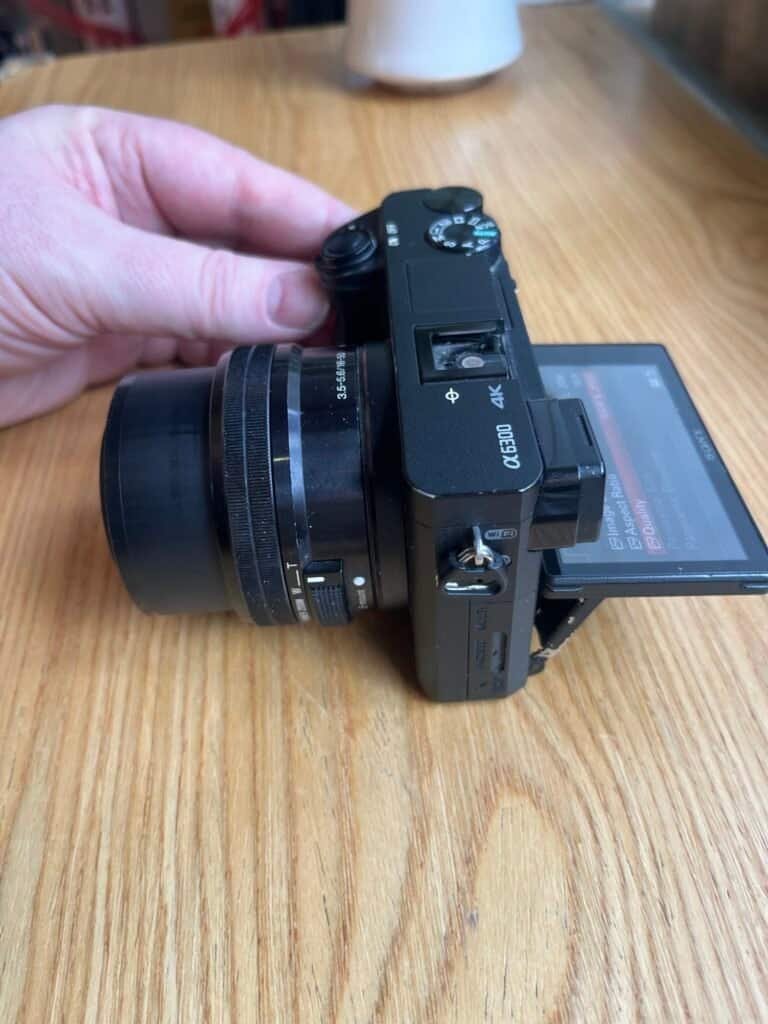
Oh boy… in anything other than darkness or the dimest day, this LCD is hard to read, don’t even try to use it in sunlight.
Rolling shutter
Now to be fair a lot of the earlier mirrorless cameras have this, but it was particularly noticeable on this camera.
Overheating
The camera is great for video but oh boy the overheating is an issue if you use the video in longer sections, it has even shut down on some occasions.
Stabilisation
Again to be fair not many cameras of this era had this. The closest small body that had this was the Ricoh GRIII (I think). Even this came out a good three years later.
This unfortunately had an impact on the video, which otherwise was fantastic.
Lots of lenses
This is one of the strengths of the Sony E-mount.
You get access to:
- Sony APS-C lenses
- Sony full-frame lenses
- Third-party glass from Sigma, Tamron, Samyang, Zeiss, Viltrox
To be completely honest so far I have not made the most of these great options, because I jumped ship back to Fujifilm at the time. I just enjoy that ecosystem more.
Who is this camera for?
I would not say it is for a working professional, wedding and events etc. Perhaps if you are doing something niche, and this camera fits your particular aesthetic then I guess it could be used for whatever your personal needs might be. It is a solid all round camera.
However in general I would say this camera is good for:
- Street photography
- Travel photography
- Run and gun video work
- Product photography
- Landscape, if you want to go light weight
- Life family, friends, pets etc
- Social media

Final Thoughts
There was a time I wanted to give it away, but only because I felt it deserved to be used more. It is close to being the perfect travel camera and street photography, but are the faults worth looking past?
The grip is amazing, the weather sealed magnesium alloy body speaks of quality beyond its price. The image quality for photographs is very strong, the files are a pleasure to work with. The autofocus is still competitive despite being 10 years old, and the video is still good enough for most use cases today. The a6300’s lowlight performance is on par with many APS-C sensor cameras today. This just such an awesome all round camera.
The biggest disadvantages I say are the butteries and the menu. That said there are not deal breakers. In fact every time I pass by it, I just have to pick it up, then the grip immediately feels fantastic.
Would I buy it now? No I think there are better cameras out now, not unless I found it at a great price. It’s perfect for someone on a budget or a beginner. This camera really comes into its own as a B camera for video. The a6300 still is a good camera and as long as you are okay with a weak battery life and maddening menu you can’t really go wrong with this camera. This little compact beauty is still a strong all rounder.
These are some other post you might like
If you’re interesting in challenging your photography why not read my suggestions here, and see what I am doing to challenge myself in 2025 here. If you are looking to up your game you could also check out my street photography/travel photography here. There is a great review for the Canon 6D Mark I here as well as a camera comparison between the Nikon D600 and the Canon 6D Mark I here.
If you want to check the prices of gear or cameras try MPB