

Best Street Photography Camera You Never Heard of: The Panasonic Lumix DMC-LX3 Review (2026)
With no extra cost to you this post has affiliate links – if you buy something from MPB, I get a free coffee.
I fell for it. By “it” I mean all the technical spec waving about the fastest autofocus, better pixels, full frame and all that BS. I will save you thousands of your hard earned coins.
If you have the Panasonic LUMIX DMC LX3 (which I did) stick with this for a very long time (which I didn’t). It’s an awesome little camera. You could survive on this strict diet of “one” for a very long time, don’t listen to the hype.
However nothing is perfect so let’s have a look at this vintage compact camera.
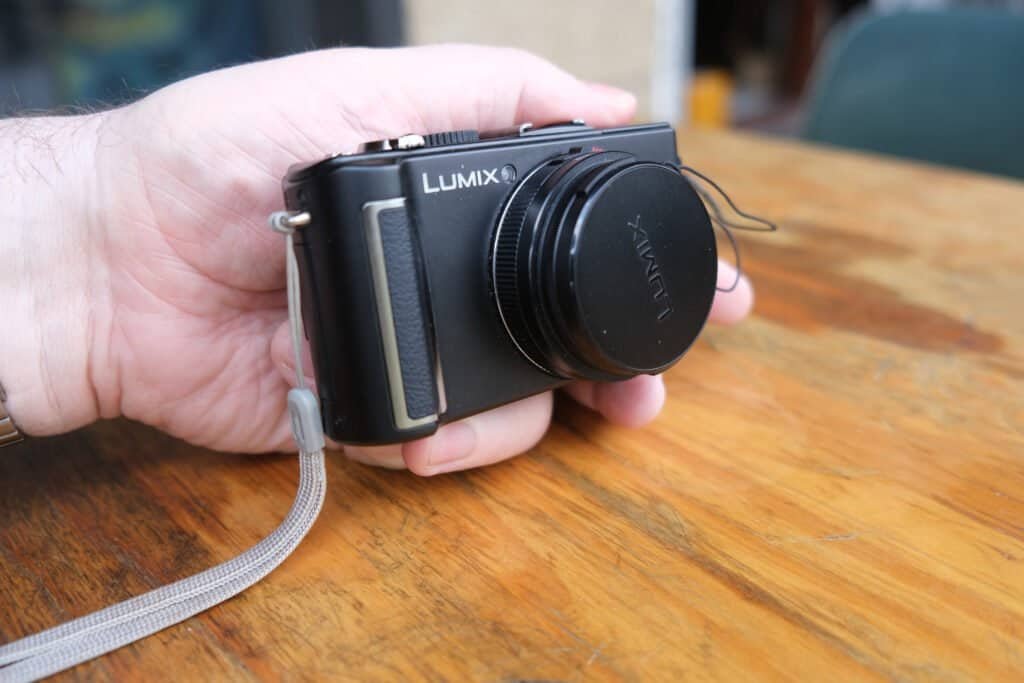
The Panasonic DMC-LX3
When you see this camera it does look classic, its smooth black surface and metallic coloured buttons, it reminds me immediately of the early 2000’s or even 1990’s. It was in fact released in 2008. It was a quality camera from back in the day and that quality carries on to today, even if some of the specs don’t quite:
Key Specifications
- Sensor: 1/1.63” CCD
- Resolution: 10.1 megapixels
- Lens: Leica DC Vario-Summicron
- Focal length: 24–60mm (equivalent)
- Aperture: f/2.0 – f/2.8
- Optical zoom: 2.5x
- ISO range: 80 – 3200
- Shutter speed: 60 sec – 1/2000 sec
- Autofocus: 9-point AF
- Video: 720p HD
- Screen: 3.0-inch LCD
- Resolution: ~460k dots
- File formats: JPEG + RAW
- Storage: SD / SDHC cards
- Battery life: ~380 shots
- Controls: Full manual (P / A / S / M)
The Leica elephant in the room
That’s right, this LUMIX camera has a Leica lens, or does it? LUMIX has some 50 cameras and lenses that are certified as Leica lenses. This is one the main reasons this camera and other older cameras like are still appreciated or even sought after even today after many years.
There is a “but” or at least a “maybe.” You see this a lot, even with camera phones today which have lenses from Hasselblad or again Leica. This typically means lenses are produced to the standards of that brand (in this case Leica). The lenses are produced in cooperation with rather than having been swiped out from Leica’s workshop, where magical pixies smooth out the imperfections with their little tiny hands, for them just to be placed delicately placed into a LUMIX cameras.
Does this make a difference? Not for me, I love the image quality produced either way.

The handling
I absolutely love this camera. It’s size is perfect. That’s the good part. The overall ergonomic experience isn’t great. So far all the compact cameras I have handled from the 2000’s have terrible grips and they all feel sketchy to hold without a strap.
This Panasonic camera is not an exception to this rule. It’s plasticy all over and slippery. It’s smooth and the handle bump is just for decoration, because it’s so slight a bump it can’t serve a real purpose.
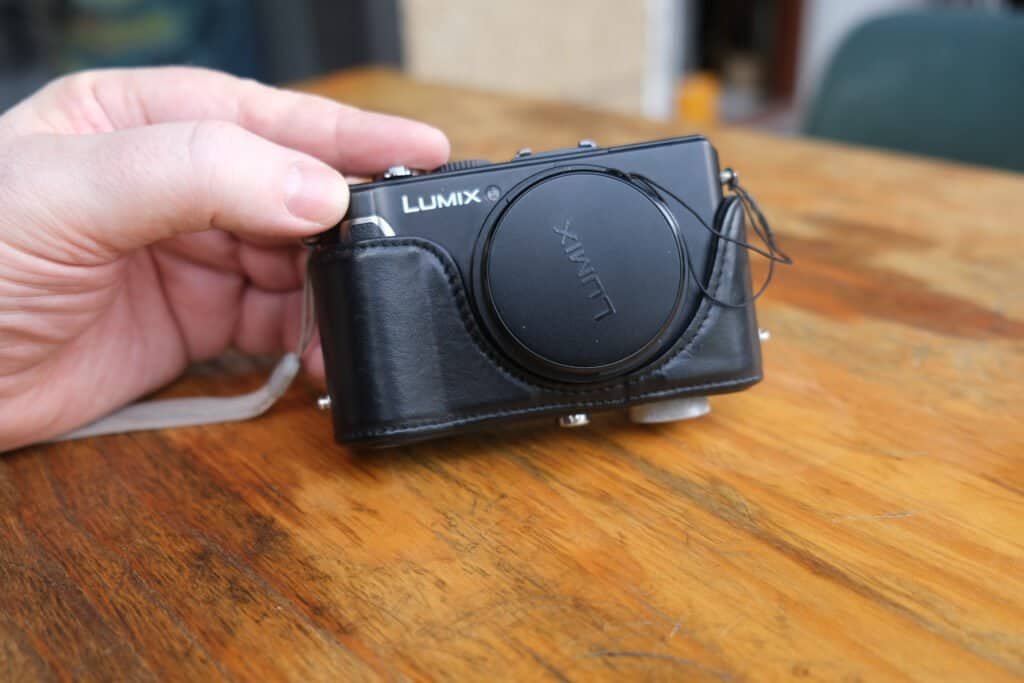
Like the compact cameras I have come across, I would not ever use this without a strap, or without the beautiful leather case that I have.
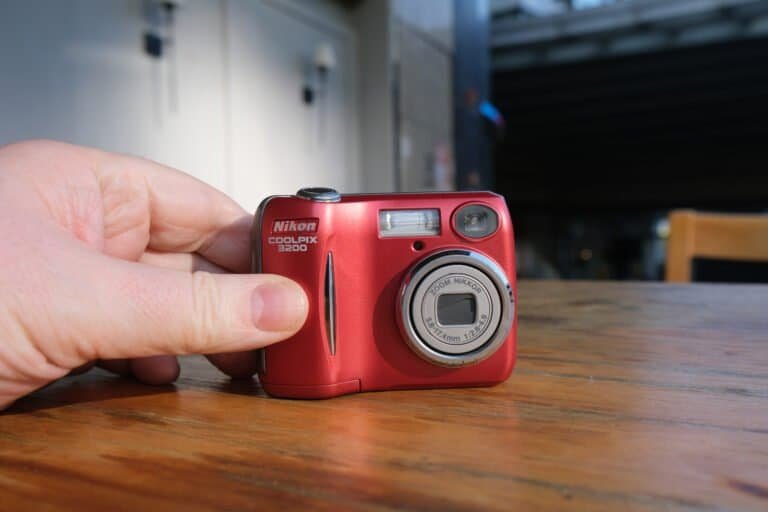
As the clumsiest camera dropper I know, I feel this just like the Nikon Coolpix 3200 would never survive a drop. This is heavier than the Nikon so the impact would be punishing. So please at least use a strap with this beautiful little camera.
What I like:
- Size, it perfect fits in the palm of my hand
But there is more:
What I don’t like:
- Camera bump to small
- The body plasticy and slippery
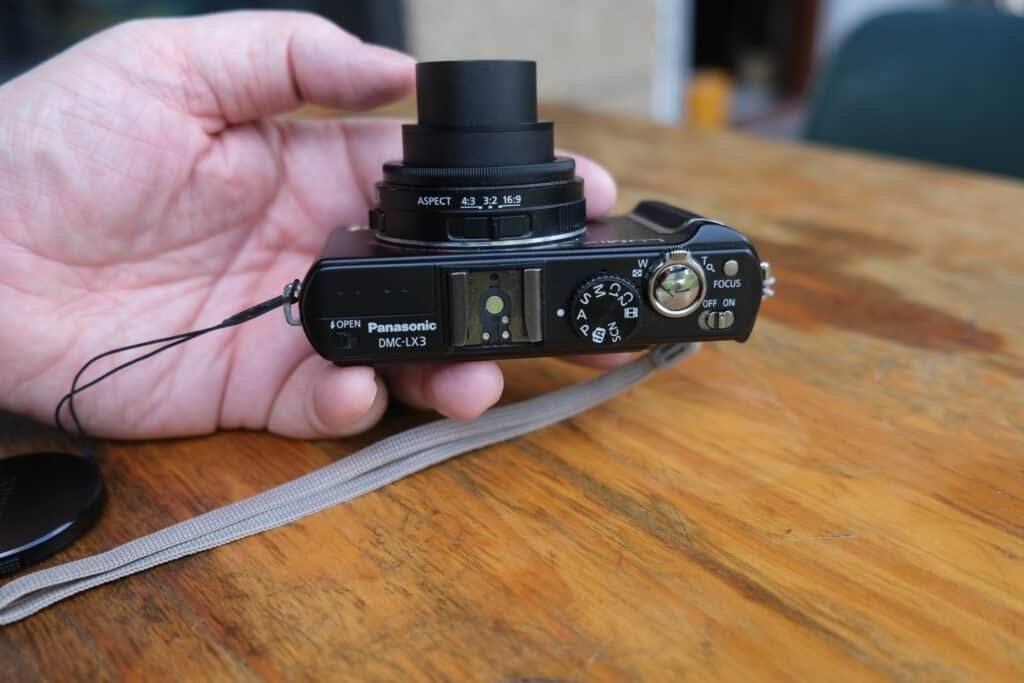
The buttons and dials
This compact camera has a very strong button layout. I recall when I first picked it up I found some of the buttons and controls sliding switches quirky. I soon came to truly appreciate them.
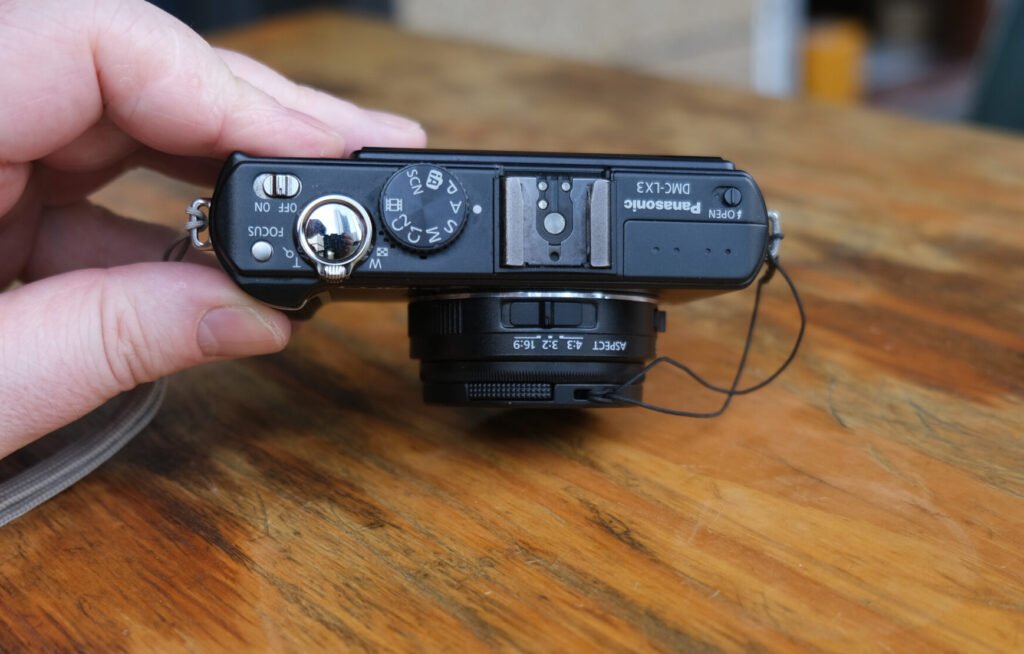
Switches
This Panasonic camera does have a few sliding switches. More than perhaps I am usually used to. However anything beats menu diving, and quickly came to really enjoy them.
On off
This slider at first seemed a a little curious to me. I mean side mounted switch it didn’t seem smooth or easy to use. However I ended up with quite the different opinion. In between shots, when I was moving from street to street, looking for new things to capture it became really instinctive to flip on and off.
The size of the switch is perfect for this body. It is an horizontal siding switch but as my hand dropped to my side in between shots, as I studied differences scenes it becomes a vertical one, which even easier to use. I began to use it instinctively as I naturally during that trip because I wanted to preserve the only battery. I wish all cameras had this now.
(I have since found out this common with many Panasonic model with slide variations.)
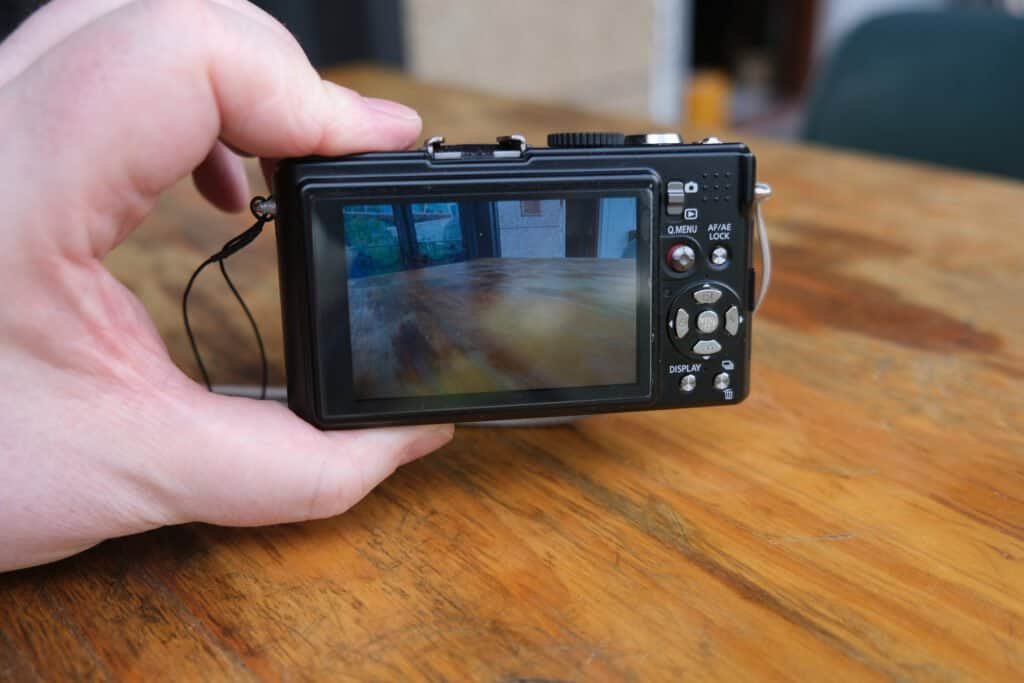
Aspect ratio
There is an aspect ratio switch at the top of the lens barrel. You can choose the aspects 4:3, 3:2, or 16:9 framing. Simply select the aspect ratio according to your needs. I kept mine a 16:9 but I like to the have the option.
Focus mode
This is a more common kind of switch, but I still like the design. It’s accessible fairly ergonomic. You have the option of AF (normal), AF Macro, and MF (manual focus).. I kept with AF. I would be interested in trying the Macro at some point. This focus switch is interesting option rather than having to use a focus ring.
In manual focus you In manual focus, you use the rear joystick and on‑screen magnification to fine‑tune focus instead

Photo or camera
This another slider that I have come to really enjoy. Simply choose whether you’re taking a photo or looking at stored images. Simple and functional.
Top dials and modes
At the top the camera is the mode dial for quick access to functions and modes. The are as follows:
- Intelligent Auto (often a red “iA” icon): Fully automatic, camera chooses scene type and settings
- P – Program AE: Camera sets shutter and aperture
- A – Aperture Priority: You set aperture, camera sets shutter speed
- S – Shutter Priority: You set shutter speed, camera sets aperture
- M – Manual: You set both shutter and aperture
- C1 / C2 – Custom 1 & 2: User presets that store your favourite settings
- Motion Picture (movie camera icon): Video recording mode
- SCN (Scene): Unlocks (portrait, sports, night, macro, etc.)
Rear controls
Rear controls all designed to be quick and it does give you a quick and easy way of accessing these functions. They are as follows:
- A mini joystick used to adjust settings like aperture, shutter speed, and exposure compensation depending on mode.
- The four-way pad used for self-timer and flash, a programmable function, exposure compensation
- Below the pad are buttons for display and continuous shooting/delete
- There is also an AF/AE lock button on the rear
I beginging to realise another button layout that is also popular with this older cameras is another switch for photo and image. I have also become very fond of that and I find myself wishing that was still a thing.
There is a little joystick that sturdy and accurate, in fact all the buttons are very well laid out and intuitive once you get used to them.
There is even this fantastic aspect switch. You don’t have to go into the menu you chose which aspect ratio you want on the body of the camera. That’s genius.
It is important to note though, this camera is not really a one handed use camera, but due to is size it comes quite close.
What I like:
- A side mounted on/off button
- A similar camera/photo mode button
- Aspect ration slider
- Sturdy directional joystick
- Solid pleasing buttons
- Intuitive layout
- Less menu diving
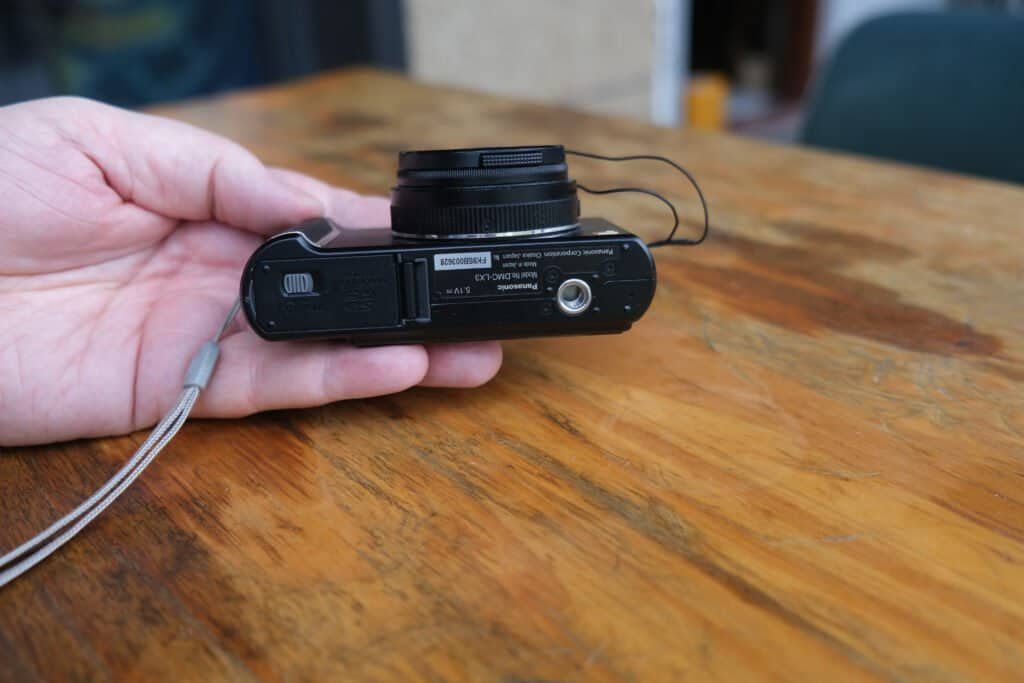
The lens at 24mm
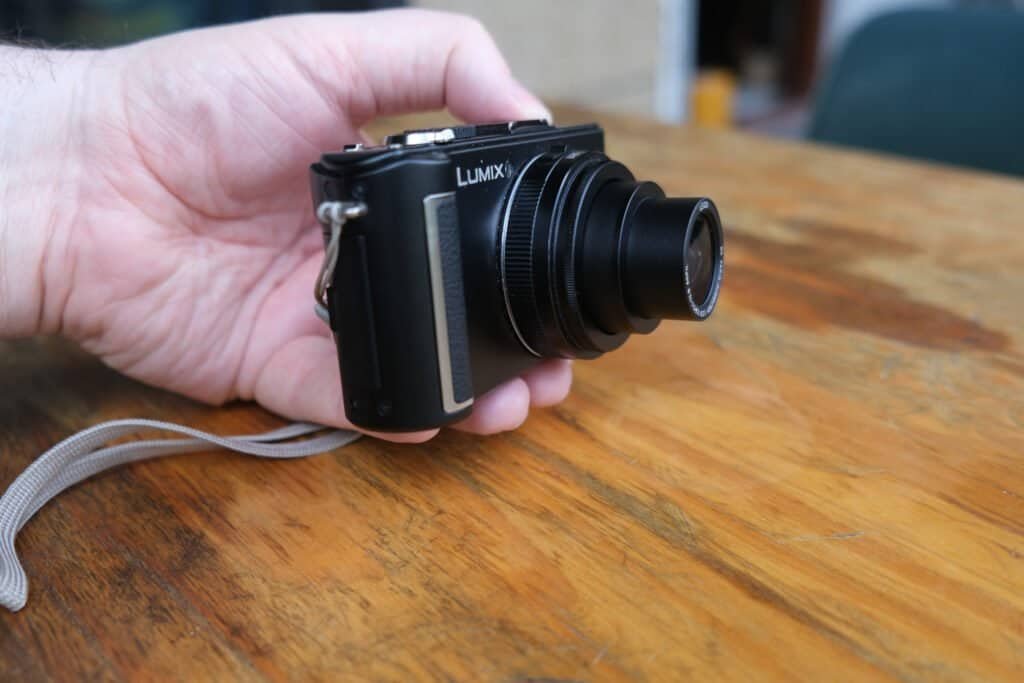
The Leica DC Vario-Summicron is the lens on this camera and it’s the main reason so many people still talk about this LX3 from 2009. The lens itself is small, even when fully extended. Which pretty much is the same with most earlier compact cameras
This f2.0 lens is fairly fast and surprisingly good in less than ideal light and totally usable indoors. In combination with this sensor, this Panasonic DMC-LX3 has produced some of the most beautiful images I have seen on any camera I have used, full stop.
The lens is sharp. It is slightly softer around the edges. It is better than some modern lenses I have used in this regard. It is a quality lens.

Too wide?
At its widest the Summicron lens is 24mm, which is perhaps too wide for some photographers. This focal length is tricky because you need to get up close, unless you’re catching the wider scene before you.
Personally I love the limitations of 24mm because you have to get closer to the scene or subject. As the great Robert Capa said:
”“If your pictures aren’t good enough, you’re not close enough.”
The focal length on the Panasonic LUMIX DMC LX3 might not be as unusual as you think. The legendary Ricoh GR III is 28mm and most phones are somewhere in the range of 22mm-30mm. Without their wide or zoom. This camera came out in 2008, it is almost like it knew where the sweet would be.
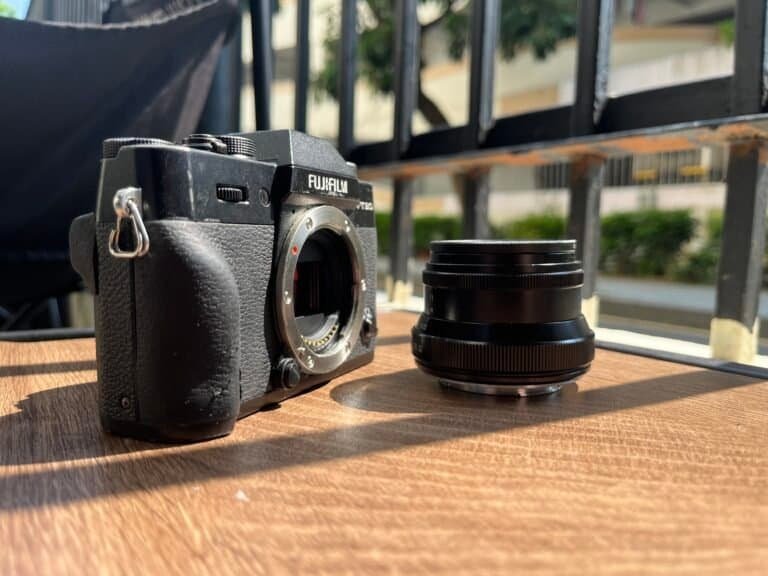
I shot extensively with a 16mm lens on my Fuji X-t30 for years, which is a 24mm full frame equivalent. It was challenging yet fun. This lens however has none of the distortion that the Fuji lens has. This as for environmental portraits, where it is pretty essential to include the environment around the subject.
What I like
- The size it’s small
- 24mm is a fantastic focal length
- It’s similar in focal length too many phones and the Ricoh GR III
- It’s sharp f2.0 is very fast
- The lens has a lot of character
The Zoom Experience
To be honest I so rarely use zoom on any lens or camera body. The only exceptions are when I’d shoot video with a model.
24mm to 60mm
The zoom can come in handy if you’re at a distance from the subject or scene and you’re not manually get closer to it (obviously). To give you an example, there was a case when I was on a trip to Chengdu. I wanted to capture a certain road side scene where people were eating, but a parked car prevented me from getting as close. I tried shooting over the car and had to zoom in. As with ,ost of my zoom shots I wasn’t that happy with the results, but that’s me not the camera.
I don’t find any fall off in quality with this lens at any focal length. At 60mm the camera is at f2.8, This is fantastic for its size.
The LX3 lens is a good all round lens. At f2.0 and f2.8 (at 60mm) it is as good as any modern lens. It’s sharp and lets ample light in for most situations.
What I like
- At 60mm, f2.8 it is still fast enough
- At focal lengths clear and sharp
- Still small even when fully extended
- At 24-60mm is a great all round lens

The Sensor
You can’t beat the sensors that ooze nostalgia not for atmosphere and feeling at least. There’s just a way the process tones and light.
The sensor on this high end point and shoot camera produces some of the most gorgeous images I have come across. At times the photos are deep and rich, yet muted. At other times they seem almost dreamy and ethereal.
This camera doesn’t have the early raw internet colours. It images more resemble modern sensors, but at the same time sits in a class of its own. It seems both fairly modern but retains a vintage vibe.
It really doesn’t matter to me that it only has a 10 million pixel sensor. In fact once you have seen the images and colours it can produce, it supports the argument that you don’t even need a megapixel sensor.
This camera has produced some of my most favourite emotive images I have taken.

The Raw Files
I shoot in raw mostly and these RAW files are a real pleasure to work with. You can really push and pull the shadows and the highlights. They are some the most pleasant files I have worked with. A big plus.
What I like:
- Rich images
- 10 million pixels is really enough
- It sits between modern and vintage in feel

The Autofocus
Let’s be honest here. If your shopping for razor sharp focus, go with a very modern camera like the Canon R6 or anything made by Sony in the last 6 years. As wonderful as these older small cameras they can’t compete with up to date cameras. The Panasonic Lumix’s af system is dated, but still very functional.
A person who is using this camera is looking to slow down the photographer game, not speed it up. This age of camera is about enjoying the moment, enjoying the simplicity of it all.
That said this camer does have some of the autofocus options that we have in recent years become familiar with.
- Af tracking
- Face detection
- Mulit-area
- Manual focus
I typically stick with Multi-area focus and reall on better light to catch clear images. I have captured e-bikes travelling at reasonable speed and bicycles without too much blur. As long as you choose your subject carefully you will be ok.
It has burst speed, but let’s be frank if you are look for that try a much newer camera.

The Lowlight and ISO
This is an old camera (2008) so please don’t expect to be a low light beast because it is not.
Once again if you looking low light cameras you will need to look the latest and greatest camera and not this or other compact or point and shoot cameras. You really can’t push the ISO on this.
In good daylight, or pools of strong artificial light you can get some fantastic results though.
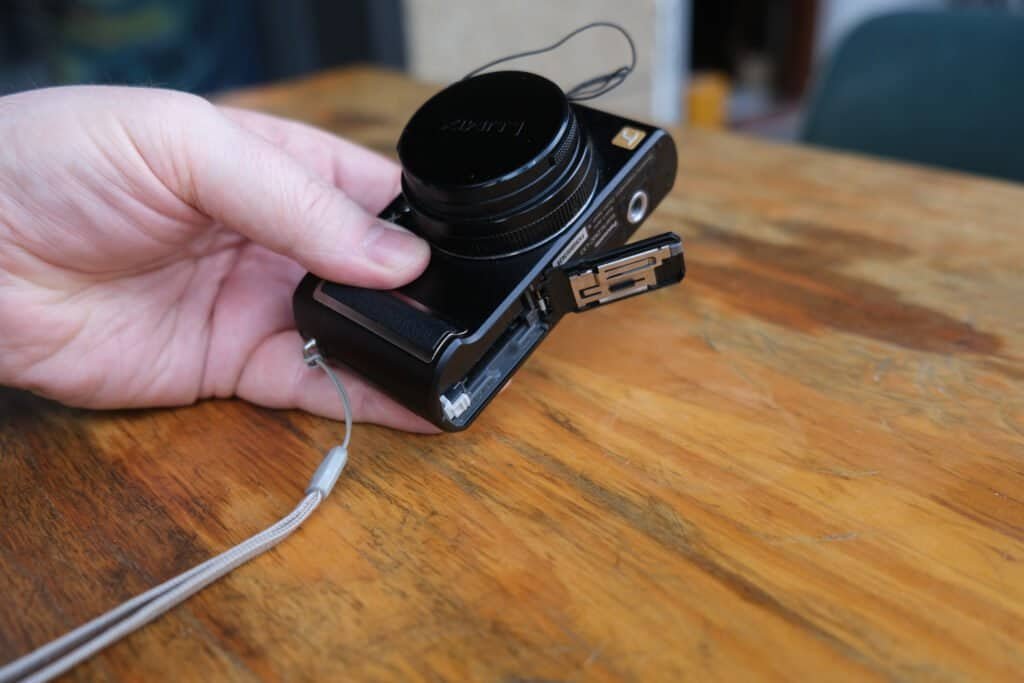
The Battery
I only have one battery. That’s good enough because its good good for 380 shots. I love that, and together with the awesome storage you really feel its camera you can pick and go shoot without too much worry in your heart.
Internal storage!
I wish all cameras had this. It’s fairly well established I’m forgetful and clumsy. I can’t begin to tell you how many times I have forgotten an SD card.
This camera has 50 mega byte storage that is good enough for quite a few high quality JPEGs. This has saved me quite a few times.
This camera can handle the standard SDHC cards as well, if you remember to bring one.
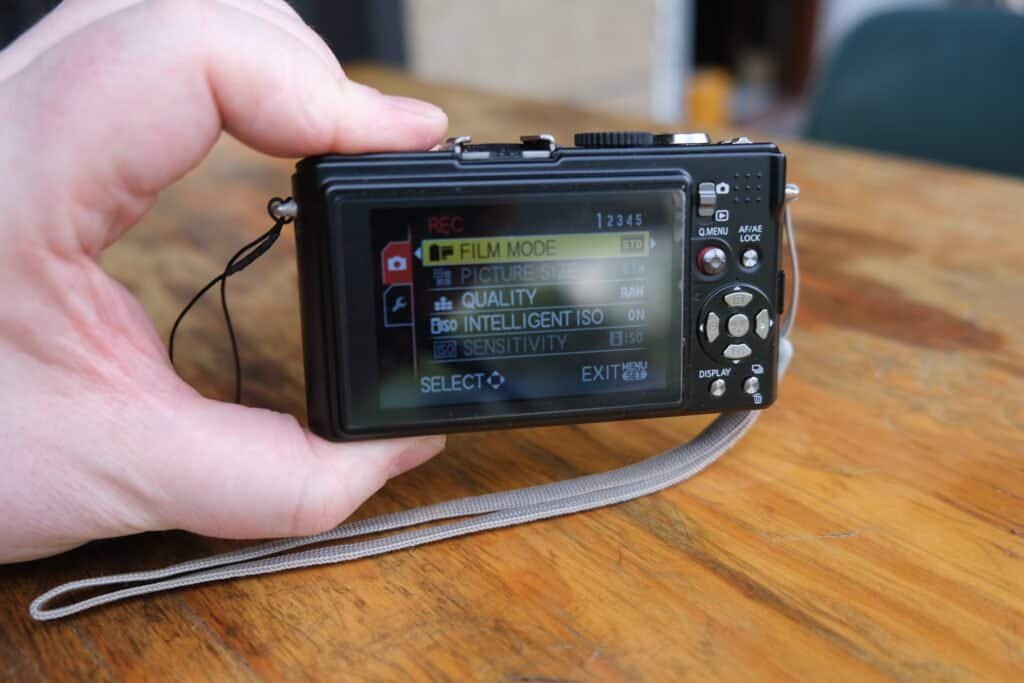
The Menu
This is another winning aspect of the this camera, the menu is wonderfully clear and simple. The design is clear to read and so easy to scroll through. This is a massive plus in my book. One of my favourite menus out there.
The LCD screen
Its surprisingly bright. It is very useable in daylight, although not direct strong sunlight. It’s bright and clear I have zero complaints about it, especially when your consider its age.
Who is the Panasonic DMC-LX3 really for?
This camera is not for everyone. It is however for many of us. If you want fast autofocus, long bursts of photo which are in focus, or video, or even good low light. then look else where. Buy any other camera from a big brand in the last 10 years.

This camera is for:
- Street photographers
- Travel photographers
- Documenting life
- Family photos
- Social media and story telling
Mostly this camera is for anyone who wants a light weight but very good quality images and for anyone who wants a great photo taking experience.
If you’re bored of perfect clinical images, If want a small camera in your bag, that allows you to slow down and enjoy photography again. Then this camera is for you.

Final thoughts
I have a confession. I hinted at this at the very beginning. I am not immune from advertising and sexy specs. If I had truly slowed down, turned off YouTube and never listened to any reviews, I could have settled with this camera for a very long time. I would have spent many glorious years taking great, poignant and fun images. If I could time travel and convince an earlier me, I would. The problem is I never listen to myself, even when I do have great advice.
I will try now and here. If this camera seems like it might be for you, it probably is for you. Save your money, use the hell out of this beautiful camera, slow down and bring meaning back to your photography. This is a very good camera. Don’t waste your time on camera reviews. Buy the Panasonic DMC-LX3, you don’t need a heavy DSLR.
If you can find one in great condition, or you can steal it off somebody close to you (that’s what I did) then do it and don’t look back. You don’t have to waste your money on newer and shiner cameras, use this first.
This camera is close to beating out the best smaller camera I have ever owned which is of course is the Ricoh GR III. It definitely has the more pleasing sensor. Please for pity’s sake get a strap or a nice fancy leather case, if you decide to buy.
If you want to check used prices of gear or cameras try MPB